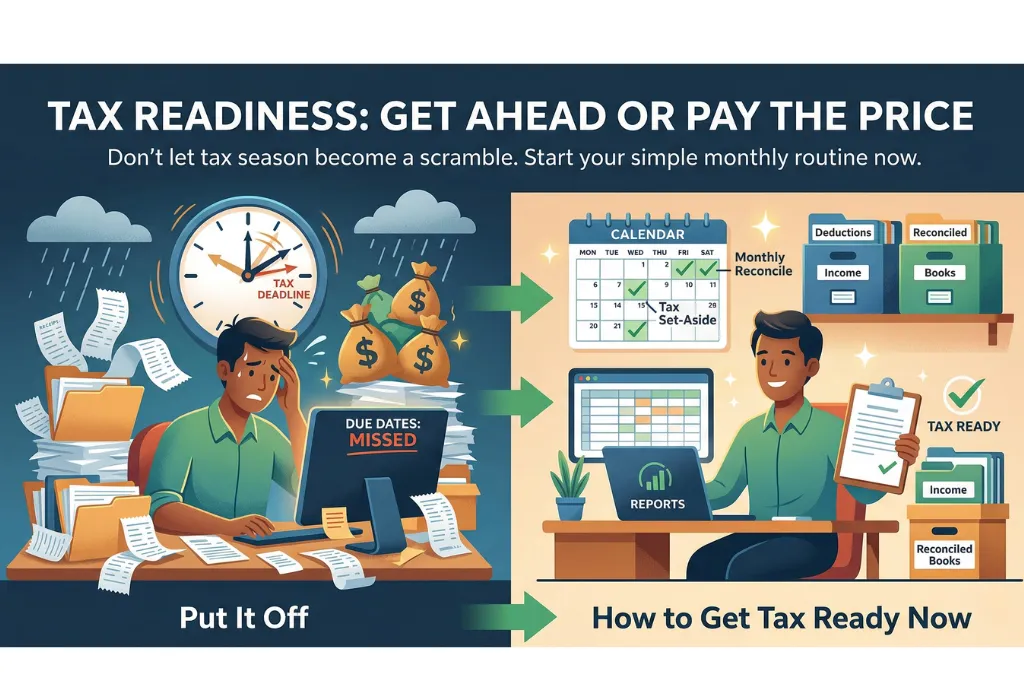
Tax Readiness Delays Create Stress and How to Fix It
Tax Readiness Gets Expensive When You Put It Off and How to Get Tax Ready Now
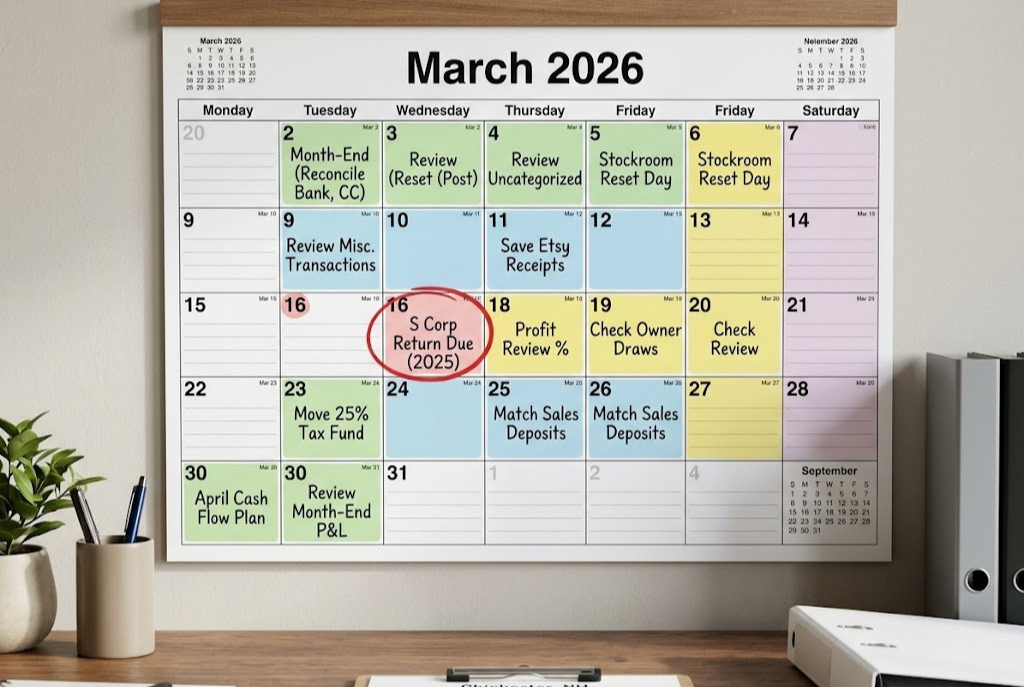
If March rolled around and you were still digging through receipts, trying to remember what that one transfer was, and hoping tax time would somehow sort itself out, this is exactly why tax readiness matters now, not later. For calendar-year S corporations, the 2025 return was due March 16, 2026 because March 15 fell on a Sunday, and estimated tax due dates keep coming on a predictable rhythm after that.
I see a lot of small business owners treat taxes like the clearance bin in the back room. It is where the messy stuff gets shoved until there is no room left. The problem is that taxes do not stay in the back room. They show up at the register, in your cash flow, and in your stress level.
Tax readiness is not about being perfect. It is about having books, records, and routines that make tax season a handoff instead of a scramble.
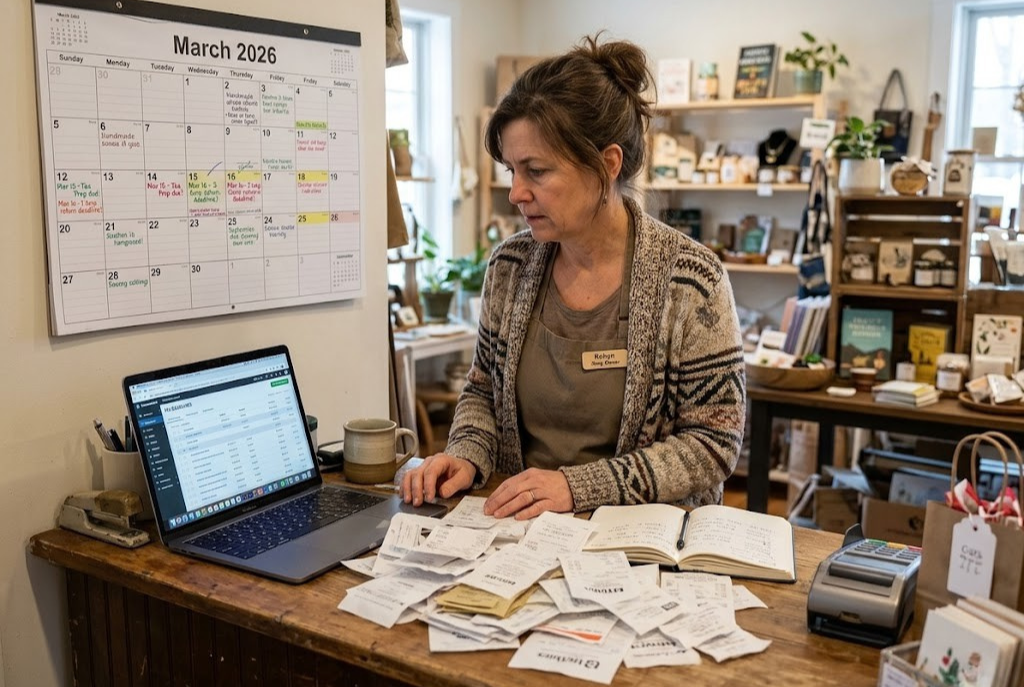
The IRS is pretty direct about this. Good records help you monitor progress, see what is selling, support deductions, and back up what goes on your return. Your books should show your income, deductions, and credits clearly, not leave you guessing.
If you want extra support while you read, for more help, visit the Balanced Path Resource Library to grab tax guides and checklists. It currently includes resources like 5 Must Have Tax Saving Strategies for Creative Shops, Decision Tree for Who Gets a 1099?, and 8 Big Money Mistakes Small Businesses Make.
Why tax readiness now matters more than “I’ll deal with it later”
Putting taxes off feels harmless in the moment.
You tell yourself you will catch up next month. Then next month turns into quarter-end. Then quarter-end turns into “I’ll just deal with it when my tax person needs it.”
That is usually where the real trouble starts.
When books are behind, you are not just late on paperwork. You are making decisions without clear numbers. You may not know what is safe to spend, what needs to be set aside for taxes, or whether your profit is real or just an illusion created by uncategorized transactions.
For retail stores and online sellers, this gets messier fast. Inventory, payment processor fees, shipping costs, sales tax, returns, and owner spending can blur together if the monthly work is not getting done.
And the tax calendar does not pause because your month got busy. The IRS estimated tax schedule keeps moving: April 15, June 15, September 15, and January 15 of the following year.
That means tax readiness is not a once-a-year project. It is a monthly discipline.
If this sounds like you…
You know roughly what sales were, but not what profit actually was.
You wait until tax season to clean up categories.
You are not fully sure what to save for taxes.
You have receipts in email, paper piles, and random screenshots.
You mean to reconcile monthly, but it keeps sliding.
You feel financially busy all the time but not especially clear.
If that list feels a little too familiar, you do not need a motivational speech. You need a simpler rhythm.
If you want the service side of this spelled out clearly, here’s a closer look at bookkeeping services and what “tax-ready reports” should actually mean. The page explains monthly reconciliations, clearer reporting, and why tax season should feel like a simple handoff instead of a frantic receipt hunt.
My simple tax readiness routine for small business owners
When I talk about tax readiness, I am not talking about a complicated finance system with color-coded dashboards and twelve separate spreadsheets.
I am talking about a repeatable monthly rhythm.
Here is the basic version:
Reconcile bank and credit card accounts
Review uncategorized transactions
Save support for unusual or large purchases
Check owner draws or transfers
Look at profit for the month
Set aside tax money
Flag questions while the month is still fresh
That is it.
Not glamorous. Very effective.
Tax readiness checklist
Reconcile every bank and credit card account
Match sales deposits to what actually hit the bank
Review fees from Shopify, Square, Stripe, PayPal, Etsy, or Amazon
Confirm loan payments are split correctly between principal and interest
Review payroll entries if you have employees
Clean up owner transactions
Save documentation for big purchases, travel, meals, and equipment
Review your year-to-date profit
Move your tax set-aside
Write down any questions for your bookkeeper or tax preparer
This is the part many business owners skip: the tax set-aside needs to happen before the money gets absorbed into inventory, ad spend, or “just this one extra order.” That is why I like tax readiness as a monthly habit, not a year-end panic response.
Balanced Path Tip
Pick one day each month and treat it like your stockroom reset for your books. Do not wait until the shelves are falling over. A clean monthly reset is easier than a full financial excavation later.
The SBA points business owners back to the fundamentals here too. Proper bookkeeping helps keep a business running smoothly, and understanding core financial statements matters for decision-making, not just compliance.
If cash flow is where taxes keep sneaking up on you, here’s a useful next step on cash flow management and how to set money aside on purpose. That page focuses on building a simple plan for expenses, owner pay, profit, and taxes before the month gets away from you.
Quick wins for better tax readiness this week
You do not need to overhaul your whole bookkeeping system this weekend.
You do need to stop letting easy fixes sit untouched.
Quick wins
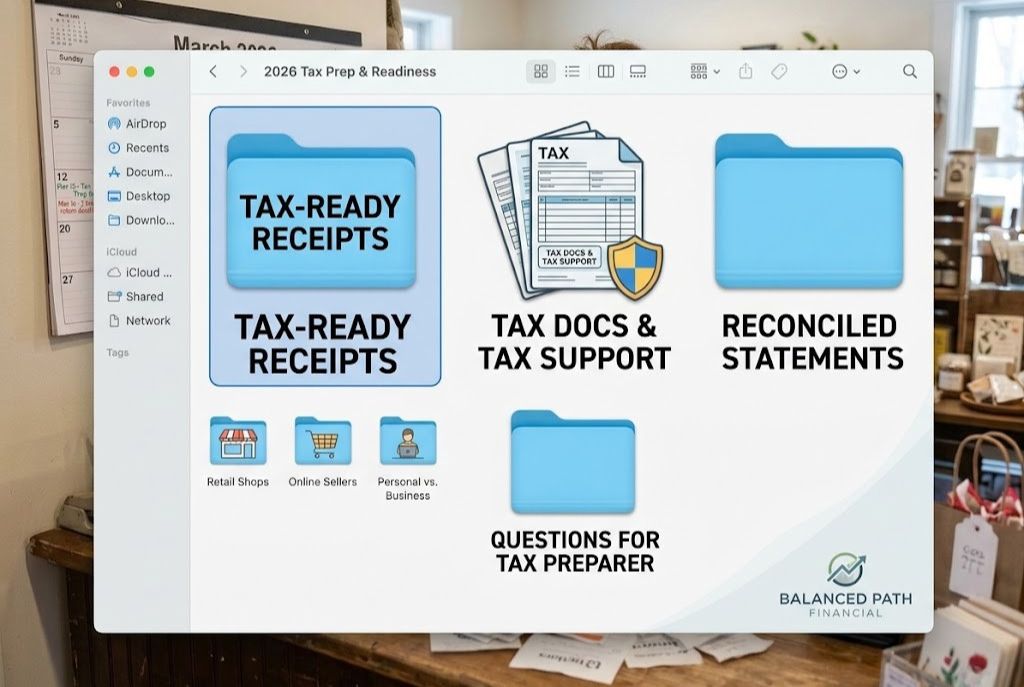
Create one folder called “2026 tax support” and start dropping receipts and PDFs there.
Pull the last three months of bank and credit card statements in one sitting.
Write a short list of every place money comes in and every place money goes out.
Set a recurring calendar reminder for your monthly book review.
Open your P&L and circle anything that looks vague, missing, or obviously wrong.
Move one percentage of each deposit to a tax savings account.
Stop paying personal expenses from the business account if that is still happening.
Small wins matter because tax readiness is mostly built through maintenance.
It is the same reason a tidy sales floor is easier to keep tidy than one that gets wrecked for six straight weeks. Once the mess builds up, every correction takes longer.
The IRS also says your records need to be kept as long as needed to prove income or deductions, and your recordkeeping system should clearly summarize business transactions in your books.
For more practical support, if this is the part you get stuck on, use the Resource Library for tax-saving and 1099 guidance. The current library is built around staying organized, preparing for tax time, and keeping money systems running smoothly.
When it’s time to bring in bookkeeping help
There is a point where DIY stops being “saving money” and starts being “creating backlog.”
That point usually looks like this:
You are regularly behind by more than one month
You do not trust your reports
You are mixing personal and business spending
You are not sure what to set aside for taxes
Your sales channels or payment processors are hard to untangle
Tax season keeps turning into a document scavenger hunt
That does not mean you failed.
It means your business has enough moving parts that the books need more structure than you realistically have time to give them.
Balanced Path’s bookkeeping service is built around monthly reconciliations, organized numbers, and reports that are ready for confident decisions. The site also makes it clear that clean books should support inventory, cash flow, and tax-time handoff, not just transaction sorting.
If you are more behind than you want to admit, that is exactly what clean-up work is for. I would rather see a real backlog than a business owner pretending the books are “basically fine” when they clearly are not.

Key Takeaways
Tax readiness is a monthly habit, not a spring emergency.
Clean books reduce stress because they make taxes more predictable.
Estimated tax due dates do not wait for you to catch up.
Good records support deductions and help you see what is really happening in the business.
A simple monthly checklist beats a giant year-end clean-up almost every time.
If you are consistently behind, bookkeeping help is probably cheaper than continuing the cycle.
Quick Links
FAQs
What does “tax ready” actually mean for a small business?
Tax ready means your books are current, your accounts are reconciled, your major transactions are categorized correctly, and your supporting documents are organized. It should be easy to hand clean reports to a tax preparer without a last-minute scramble.
How often should I work on my books to stay tax ready?
Monthly is the sweet spot for most small businesses. It keeps transactions fresh in your mind, helps you catch mistakes earlier, and makes tax set-asides easier to manage.
What records should I keep for taxes?
Keep records that support income, deductions, payroll, and major business transactions. The IRS says your recordkeeping system should clearly show business income and expenses, and records should be kept as long as needed to prove the items on a return.
How much should I set aside for taxes?
There is no universal percentage that fits every business, because entity type, total income, other household income, deductions, and state taxes all matter. But if you are setting aside nothing, that is usually the bigger problem. Start with a consistent percentage and adjust with real numbers.
When should I hire bookkeeping help instead of doing it myself?
If you are behind, confused by your reports, or avoiding the books because they feel too messy, it is probably time. A good bookkeeping setup should save time, reduce tax-season stress, and make your numbers easier to use.
Conclusion
Tax readiness now, not later, is really about one thing: making your numbers usable before they become urgent. When your books are current, your records are organized, and your tax set-asides happen along the way, you stop turning tax season into a rescue project. That is what real looks like.
If you want help getting tax-ready books in place:
Email me at [email protected]
Call/text 603-892-8879
Or book an introduction call
📚 Visit the Balanced Path Resource Library for downloadable resources.
💵 Bookkeeping services.
💛 Personal finance services.


